ACADEMIC PROJECT | 2026
Designing an Integrated Business Tourism Ecosystem
Design Research
Research Design
System Design
Experience Design
I worked on Meet in India, a B2G business tourism concept designed to integrate government bodies, event organisers, international delegates, industry partners, and local service providers into a connected ecosystem. The project explores how a unified digital system can streamline stakeholder coordination, delegate management, business networking, and on-ground operations to strengthen India’s business tourism experience.
Team: Rishitha VS, Radhika Sharma & Sowmya J
A Delegate Management System by India, for the World
Meet in India

End to End Service Delivery
Aggregator Platform
For Attendees & Organisers
UNDERSTANDING MEET IN INDIA
Meet in India is an initiative to position India as a global destination for business events, conferences, exhibitions, and investment-led gatherings. It brings together government bodies, event organisers, international delegates, and industry stakeholders to create opportunities for collaboration, knowledge exchange, and business growth. The project explores how an integrated system can connect these stakeholders and simplify the experience of planning, hosting, and participating in business events across India.
Government Bodies
An Integrated System to connect India's Stakeholders
International Delegates
Service Providers
Event Organisers
Industry Partners
Plan
Coordinate
Curate & Connect
Experience
Track Impact
RESEARCH DESIGN
How we designed our research
curiosity
collaborative co-creation
human
sensitivity
accessible technology
key
decisions
sustainable
growth
My thought process
Primary Research
Analysis
Insights
Design Interventions
Reports
Website Audits
Social Media Reviews
In Depth Interviews
Field Visits
Expert Elicitation
Thematic Analysis
Gap Analysis
Stakeholder Analysis
Insight Mapping
Success Framework
Interventions
PHASE 1
PHASE 2
Reports, website audits and destination comparisons frame the context.
Interviews, observation and experts reveal needs and operational constraints.
Thematic, gap and stakeholder analysis connect recurring issues.
Translate insights into human and digital touchpoints.
Primary Research
MARKET RESEARCH
Why did we choose Conferences & Exhibitions?
MICE means Meetings, Incentives, Conferences and Exhibitions. The research focused on conferences and exhibitions: accessible event contexts through which to examine international delegate journeys.
49.4
Billion Revenue
13.2%
Projected Growth Rate
65%
B2B Events
What value are delgates seeking?
Transactional Value
Information Value
Relational Value
Aggregational Value
Sales, Leads, Business
Learning Trends, Benchmarking, Cultural & Market Context
Networking, trust, visibility & cultural experience
Density, comparison & sourcing efficiency
Value Creation through Conferences & Exhibitions
How can India utilise its existing conference & exhibition ecosystem to increase the inbound flows and improve the experience of International Delegates & Attendees?
RESEARCH QUESTION
PRIMARY RESEARCH
How did we collect perspectives beyond the reports?
Secondary research established the industry context; primary research investigated where value was lost in human experiences.
respondents
15
3
methods
Organisers
Facilitators
International Delegates
In-Depth Interviews
Participant Observation
Expert Elicitation
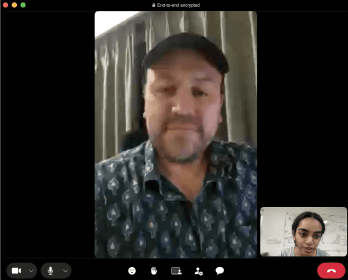
Primary Interviews



03 / RESEARCH EVIDENCE
Follow the delegate, not just the event.
15 respondents across organisers, facilitators and international visitors informed the investigation. The supplied artefacts document interviews, observation and expert elicitation.

Emerging Themes
Intent & Hierarchy
Incentive & Policy Vacuum
Promotion Deficit & Branding Gap
Infrastructure Gaps & Hotel Inventory Crisis
VISA & Documentation
Event Execution & Trust
Delegate Experience & Advocacy
Fragmented Stakeholder System
Bidding Capacity & Competitive Positioning
BLeisure Extension & Local Economy
Parallel journeys / documented stages
Pre Event
Delegate Journey Map
During Event
Post Event
Discovery & Decision
Pre Departure
Arrival in India
Attending the Event
Networking + Business Interactions
BLeisure Extension
Return & Advocacy
Concept & Bidding
Planning & Sourcing
Delegate
Acquisition
On-ground Execution
Post Event Data Collection
Review & Rebid
Organiser Journey Map
India organises Conferences & Events but does not intentionally design the attendee journey behind them.
04 / SYNTHESIS AND INSIGHTS
Fragmentation connects the findings.
110 thematic codes, 11 clusters and 10 emerging themes informed four levels of insight. These describe the original research synthesis, not national prevalence estimates.
Stakeholder Mapping

Intersection of Organisers
Public
Private
ITPO
MEA
MOT
Embassies
State Tourism Board
Home Ministry
ICPB
IEIA
VFS Global
Local Communities
Intersection of Facilitators
Hotels & Hospitality
Local Communities & Homestays
Transportation
Conventions
FHRAI
MOT
STB
ICPB
PCOs
Network on Indian MICE Agents
ITPO
IEIA
Ministry of Commerce & Industry
Airlines & Flight Providers
Airlines & Flight Providers
Where is India losing its delegates?
Four levels of insight
Market
Level
Experience Level
Policy Level
System Level
Bottom-up Synthesis through a Conversion Funnel
No single point of ownership management
leads to a disjointed global proposition
Absence of incentives affects both the demand
& supply of bidders & attendees
Lack of tracking & inconsistent service curation
& bleisure conversion affects delegate experience
& resultant advocacy
Discoverability & Visibility gaps limit global
intent generation
05 / STRATEGIC DIRECTION
One plan. A human contact. A connected network.
IndiCosys explores a coordinated service supported by a focused digital product and a lightweight partner network. This is a proposed strategic response, not a deployed platform.
How might we build sustained international pull for Indian Conferences & Exhibitions through acquisition, engagement, service curation & relationship management?
The success of the solution is not only measured by event attendance, but by its ability to create sustained International pull, ecosystem Coordination and Long Term Global Positioning for India's C & E Industry
What are the pillars that would help us build the interventions?
Visibility
Conversion
Experience
Coordination
System Impact
Discovery, Awareness & Global Reach
Registrations, Attendance, Participation
Satisfaction, Advocacy, Bleisure Conversions,
Repeat Intent
Operational Efficiency,
Stakeholder Alignment
Long Term Positioning &
Ecosystem Growth
Three strategic directions / proposed reasoning
Proposed decision: use the coordinated service as the core, a focused delegate product as the interface, and a minimal partner network as the delivery layer. Principles: continuity, one owner per moment, human help when needed, trusted dated information and mutual value.
Human Led, Technology facilitated.
Delegate Relationship & Experience Management
Platform for End to End Service Curation
06 / DELEGATE EXPERIENCE DESIGN
Experience Touchpoints
Digital
Human
Design the moments between destinations.
Current & Proposed Delegate Journey
Stage / question
Current friction / research synthesis
Proposed experience
Discovery & Decision : Is this relevant?
Weak discovery and visibility
Event details with trip context and registration guidance.
Pre-departure : Am I ready?
Visa, documentation and accommodation uncertainty
Preparation checklist, itinerary and manager introduction.
Arrival : Who meets me?
Logistical friction
Transfer details, provider confirmation and escalation.
Event : Where should I go?
Inconsistent service curation
Venue information and current session schedule.
Networking : Who should I meet?
Business connections require facilitation
Meeting plan and optional human introductions.
Bleisure : Can I extend?
Weak conversion to local experiences
Verified local options, costs and partner availability.
Return & Advocacy : What continues?
Limited tracking and follow-up
Connection recap, feedback and unresolved-issue follow-up.
07 / DIGITAL PRODUCT CONCEPT
Make the next step clear.
Prioritise discovery, event understanding, a shared trip plan and access to assistance. Networking, local experiences and feedback extend that core journey.
IndiCosys / CONCEPT
Find your next event
Industry conference · New Delhi · Sample event
Explore the event, plan your trip and find support in one place. Illustrative content, not a real event listing.
08 / HUMAN SERVICE DESIGN
Give coordination a human face.
A proposed Delegate Relationship & Experience Manager provides reassurance, triage and follow-through. The role complements providers and organisers; it does not replace them.
03 / Operational service blueprint / proposed swimlanes
Lane
Pre-event
Arrival & participation
Recovery & follow-up
Delegate actions
Discover, review and plan
Travel, attend and network
Report issue; confirm resolution; give feedback
Digital touchpoints
Event details and checklist
Itinerary, venue and live event info
Help request and visible case status
Experience manager actions
Welcome and clarify needs
Coordinate arrival and assist on site
Triage, update delegate and confirm outcome
Backstage operations
Verify bookings and event brief
Monitor requests and partner status
Escalate unresolved cases; review patterns
Supporting systems & data
Consent and itinerary records
Schedule, booking and request log
Resolution history and feedback log
Partner actions
Confirm stay and transport
Deliver transfer, venue and experiences
Rebook or correct service; confirm completion
09 / ECOSYSTEM DESIGN
Ecosystem Value Exchange Map
Primary User
International Conference/
Exhibition Delegate
Enablers
Organisers
Venues
Hotels
Transport
Local Providers
Organisers, PCOs & MICE Agents
Sponsors & Commercial Partners
Associations & Public Bodies
Incentives and tensions
Visualising the stakeholders shaping the delegate journey
The original stakeholder mapping spans public and private actors. Participation in the proposed IndiCosys model is hypothetical; no partnerships or endorsement are implied.
Shared value needs shared responsibility.
Actor
Potential incentive
Dependency / conflict
Organiser
Delegate confidence and learning
Maintaining updates takes effort.
Service providers
Qualified demand
Rates, commissions and service standards may conflict.
Communities
Local participation and income
Consent, capacity and fair value sharing.
Public bodies / associations
Destination learning and coordination
Decision timelines and ownership remain unresolved.
19 / Earlier ecosystem and value-exchange exploration. Open image to inspect at full resolution.
10 / INTEGRATED OPERATING MODEL
A schedule change tests the whole system.
One scenario connects information, action and accountability. The organiser owns the event update; the manager owns case continuity; the provider owns delivery.
05 / Integrated operating model / event schedule change
01 / Organiser / source of truth — Updates the event schedule with time and ownership.
02 / Digital product / information — Reflects the change and presents an itinerary alert to the delegate.
03 / Human service / decision — Manager checks whether transport or meetings are affected.
04 / Partner network / action — Transport provider confirms a revised arrangement; unconfirmed changes stay pending.
05 / Delegate / acknowledgement — Receives updated itinerary and confirmation, not an assumed successful rebooking.
06 / Data / feedback loop — Case outcome and recurring failures return to the organiser for review.
07 / Recovery — Escalate unconfirmed changes, explain alternatives and close after delegate confirmation.

20 / Earlier integrated scenario exploration. Open image to inspect at full resolution.
11 / VALIDATION AND IMPLEMENTATION ROADMAP
Validate the handoffs before scaling.
A staged evaluation would test problem relevance, delegate comprehension and operational feasibility before any expansion. No validation results are claimed.
Validation roadmap / proposed decision gates
Phase
Activities & deliverables
Assumption / method / gate
1 · Validate the problem
Revisit findings; prioritise pain points; create assumption map
Research remains relevant / follow-up interviews / proceed only with confirmed priority needs.
2 · Validate the experience
Test connected prototype and human support role-play; record task findings
Journey is understandable / task observation and confidence questions / revise unclear steps.
3 · Validate operations
Simulate blueprint, partner handoffs and recovery; draft responsibility model
Partners can coordinate / tabletop scenarios / resolve ownership, consent and data dependencies.
4 · Pilot and refine
One event and city with a limited willing network; review operational learning
Service can operate reliably / consented pilot / improve, expand or reconsider.
Candidate measures: task completion, itinerary confidence, successful issue resolution, partner-confirmation reliability and delegate satisfaction. Establish baselines and appropriate targets during validation; none have been measured here.
12 / RISKS, ASSUMPTIONS AND DEPENDENCIES
Coordination is a dependency—not a feature.
Fragmented ownership is research-backed. Data access, funding, partner participation and service capacity are assumptions introduced by the proposed operating model.
Priority dependencies / proposed investigation order
Dependency
Evidence status
How to investigate or mitigate
Clear service owner and funding
Ownership fragmentation is a research finding; funding model is unknown
Agree accountability and commercial scope before pilot.
Reliable event and partner data
Proposed operational dependency
Audit update sources, permissions, timestamps and correction process.
Partner participation and incentives
Unvalidated hypothesis
Interview partners; agree value, authority and escalation.
Consent and data sharing
Unvalidated operational requirement
Map minimum data, permissions, retention and access.
Service capacity and recovery
Unvalidated staffing assumption
Scenario-test workload, backup coverage and unresolved requests.
Delegate adoption
Unvalidated value proposition
Test whether the combined service is worth using.
13 / REFLECTION AND NEXT STEPS
Beyond attracting delegates: coordinate around them.
The investigation shifts attention from destination promotion to the continuity of the whole visit. Product, service and systems thinking matter together because the delegate experiences their handoffs as one journey.
The central learning is that a standalone app cannot take responsibility for an experience delivered by many organisations. A visible plan is useful only when someone can act on it.
The original team’s qualitative work offers direction, not a representative account of all international delegates. The underlying transcripts, complete PDF and detailed recruitment record were not available for this portfolio build. Individual task ownership is therefore not attributed.
Next: revisit participants and priority findings, test the core trip-and-help flow, then role-play a disrupted journey with prospective service partners. Governance, funding, staffing and impact remain open questions.